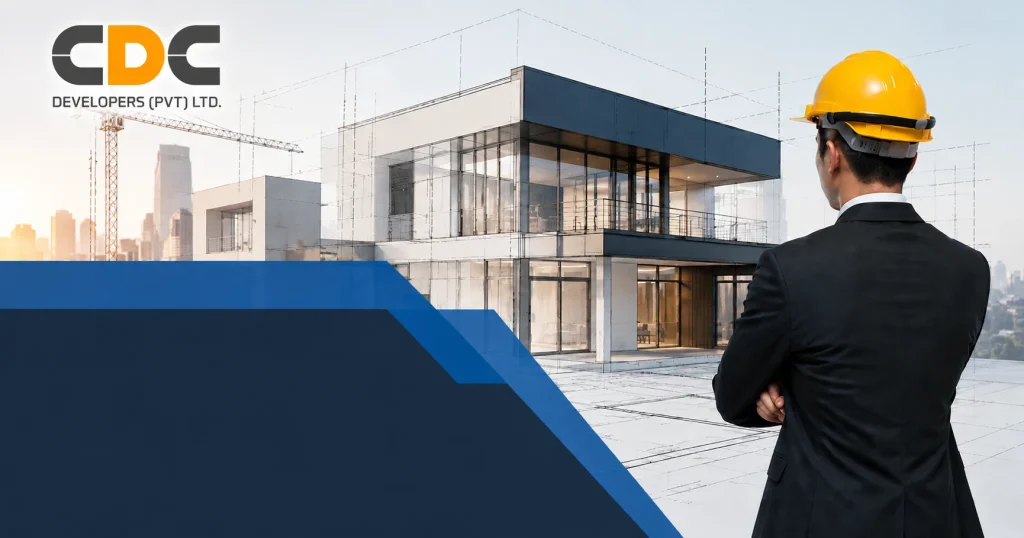
Real estate development sits at the intersection of vision, finance, and construction. It is the process of turning raw land or outdated buildings into homes, offices, shopping centers, and entire communities. For decades it has been one of the most rewarding, and most demanding, paths in business, and in 2026 the field is growing faster than ever as cities expand, populations shift, and demand for smarter, more sustainable spaces keeps climbing.
Whether you are curious about what a real estate developer actually does, thinking about switching careers, or simply trying to understand how the buildings around you come to exist, this guide covers everything. You will learn what real estate development means, the different types of projects developers take on, the step by step development process, how to become a real estate developer, the education and licensing you may need, what the job pays, and the challenges that come with the territory.
What Is Real Estate Development?
Real estate development is the process of improving land or property to increase its value and usefulness. This can mean building a new structure from the ground up, renovating an existing one, or assembling several parcels of land into a single larger project. At its core, development is about turning an idea, such as a set of apartments, a retail center, or an office campus, into a physical, income producing asset.
The purpose of real estate development goes beyond simply putting up buildings. Developers identify a need in a market and then design a solution that fills that need profitably. This is fundamentally different from just buying property. A real estate investor might purchase an existing building and hold it for appreciation or rental income, but a developer actively changes the property itself, adding value through construction, permitting, design, and repositioning.
This value creation is why development is so important in modern cities. Nearly every neighborhood, downtown district, and suburb was shaped by developers who saw potential in a piece of land and had the skill, capital, and patience to bring it to life. A few points capture why development matters so much today:
- It solves real housing and space shortages in growing cities.
- It converts underused or vacant land into productive, taxable assets.
- It shapes how communities look, function, and connect with one another.
What Is a Real Estate Developer?
A real estate developer is the person or company responsible for planning, financing, and overseeing the transformation of land or property into a finished project. Developers are the ones who take on the risk of a project, coordinate every professional involved, and ultimately decide whether a property gets built, how it gets built, and who it serves.
Developers are hired, or hire themselves when acting as the project owner, by a wide range of clients. Some work for private investment firms, some are commissioned by government agencies for public housing or infrastructure projects, and many run independent development companies that build on their own account and then sell or lease the finished product.
There are several types of developers, each specializing in a different niche. Residential developers focus on single family homes, townhouses, and apartment complexes. Commercial developers build offices, retail centers, and hotels. Industrial developers create warehouses, distribution centers, and manufacturing facilities. Mixed use developers combine residential, commercial, and sometimes industrial space in one project, while land developers prepare raw land with roads, utilities, and infrastructure before it is sold to builders.
A well known example of large scale development is a company that builds an entire master planned community, complete with homes, schools, parks, and shopping, coordinating dozens of specialists over several years to bring the vision to life.
What Does a Real Estate Developer Do?
The day to day responsibilities of a real estate developer are wide ranging, which is part of what makes the role so demanding. On any given day, a developer might be reviewing zoning maps in the morning and negotiating a construction loan in the afternoon.
Some of the core responsibilities include the following:
- Finding land or existing properties with development potential
- Conducting market research to confirm demand for the proposed project
- Creating a business plan and financial model for the development
- Securing financing through banks, private lenders, or equity investors
- Hiring architects, engineers, and designers to plan the project
- Managing the construction process from groundbreaking to completion
- Coordinating permits and approvals with local government agencies
- Overseeing marketing and leasing or sales once the project nears completion
- Managing the finished property or handing it off to a property management team
In short, what real estate developers do is manage risk and coordination. They are rarely the ones pouring concrete or drafting blueprints themselves, but they are responsible for making sure everyone involved moves in the same direction toward a successful project.
Property Developer vs Real Estate Developer vs Land Developer
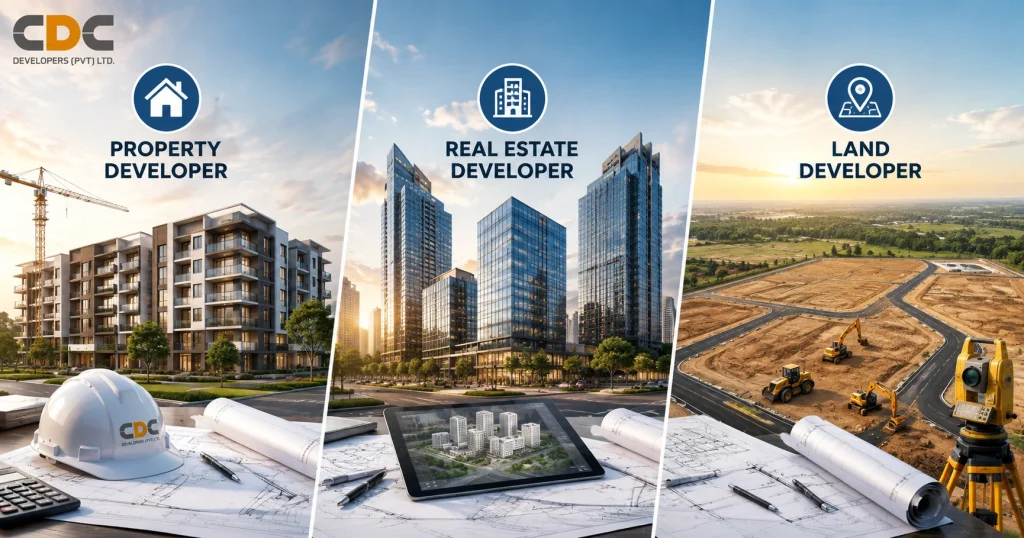
These terms are often used interchangeably, but there are meaningful differences between them. Real estate developer is the broadest term, covering all property types, from homes to offices to mixed use projects. Property developer is often used in the same sense, sometimes with a slightly stronger focus on renovating or repositioning existing buildings rather than building from scratch.
A land developer’s job is more specific. It typically ends once raw land is ready to build on, with roads, sewer lines, electricity, and lot divisions in place. A home developer specializes specifically in residential housing, producing single family homes, townhomes, and subdivisions. A residential developer works at any scale of housing, from a single home to a large apartment community, while a commercial developer focuses on income producing business properties such as office towers, shopping centers, and hotels.
The key distinction to remember is simple. Land developers prepare the ground. Real estate and property developers usually take the process further, constructing the actual buildings that go on that land.
Types of Real Estate Development
Real estate development is not a single discipline. Different project types require different skills, financing structures, and market knowledge.
Residential Development
Residential development covers everything from single family homes to large apartment communities. This category includes subdivisions, condominium buildings, student housing, and senior living facilities. Residential developers must pay close attention to local housing demand, school district quality, and affordability trends.
Commercial Development
Commercial development includes office buildings, retail centers, restaurants, and hotels. These projects are typically driven by tenant demand and long term lease agreements, meaning commercial developers often need to secure anchor tenants before construction financing can be finalized.
Mixed Use Development
Mixed use development combines two or more property types, often residential units above ground floor retail, or office space alongside hotels and apartments, within a single project or district. This type of development has grown rapidly because it creates walkable, self contained communities that appeal to modern buyers and renters.
Industrial Development
Industrial development covers warehouses, logistics centers, manufacturing plants, and data centers. With the growth of online retail, industrial development has become one of the fastest growing segments of the industry, as companies race to build distribution facilities closer to major population centers.
Land Development
Land development is the foundational stage that makes all other development possible. It involves acquiring raw or agricultural land, securing zoning approval, and installing the basic infrastructure needed, including roads, water, sewer, and power, before homes or commercial buildings can be constructed on top of it.
Real Estate Development Process
Every successful project moves through a series of stages. While the details vary by project size and type, the general real estate development process typically includes the following steps, each described briefly below.
Site selection is where developers identify a property or parcel that fits the intended project, considering location, accessibility, zoning, and surrounding land use. Market research follows, where developers study local demand, competing projects, demographics, and pricing trends to confirm the project makes economic sense. A feasibility study then combines financial modeling, site analysis, and regulatory review to determine whether a project is realistically achievable and profitable.
Once feasibility is confirmed, attention turns to financing, design, and approvals. Financing involves securing funding through a combination of equity investment, bank loans, and sometimes government incentives, structuring the capital stack to match the project’s risk and timeline. During the design stage, architects and engineers translate the developer’s vision into detailed plans, balancing aesthetics, function, building codes, and budget. Government approvals then move the project through zoning boards, planning commissions, and permitting departments, which can be one of the longest and most unpredictable stages of development.
The final stages bring the project to life and into the market. These typically include:
- Construction, where contractors break ground and the physical building process begins under the developer’s oversight of budget, schedule, and quality
- Marketing, where campaigns are launched as construction nears completion, often starting pre sales or pre leasing months before the project finishes
- Sales, which for for sale projects means closing transactions with buyers, and for rental projects means signing lease agreements with tenants
- Property management, which covers the ongoing operation of the finished property, whether retained long term by the developer or handed to a dedicated management company
How to Become a Real Estate Developer
There is no single path into real estate development, but successful developers tend to follow a similar general progression. The steps below outline that path.
- Start learning the fundamentals of real estate finance, construction basics, and market analysis through courses, books, or a formal degree program.
- Gain hands on experience by working for a development firm, brokerage, construction company, or lender to understand how projects actually get built and financed.
- Understand finance deeply, including how to read a pro forma, structure debt and equity, and evaluate whether a deal will actually be profitable.
- Build a professional network, since relationships with architects, contractors, lenders, brokers, and city officials are often what turns an idea into a real project.
- Find investors and lenders, because most developers rely on outside capital, so building credibility with financial partners is essential early on.
- Start with small projects, since many developers begin with a single home renovation or small multifamily property before moving into larger deals.
- Build a company as experience and a track record grow, allowing developers to take on bigger and more ambitious projects.
Patience is key. Most people who ask how to become a real estate developer are surprised to learn that the first few years are usually spent learning the business from the inside, rather than leading projects independently.
Education Required for Real Estate Development
A common question is whether you need a degree to become a real estate developer. The honest answer is that a degree is not strictly required, but it is extremely helpful, especially for building the financial and technical knowledge development demands.
Some of the most useful degree paths include business, which provides a broad foundation in management, strategy, and finance, and finance itself, which is critical for understanding capital structures, loans, and investment returns. Civil engineering is useful for understanding site work, infrastructure, and construction feasibility, while architecture helps developers gain a strong grasp of design and building codes. Construction management applies directly to overseeing the building process, and urban planning is valuable for understanding zoning, land use policy, and city growth patterns. Many developers also pursue an MBA later in their career for advanced business and leadership training.
Many successful developers hold a bachelor’s degree in one of these fields and later add a specialized real estate certificate to deepen their expertise.
Best Real Estate Development Programs and Courses
For those looking to formalize their knowledge, there are several strong educational paths available in 2026. University degree programs are one option, as many universities now offer dedicated real estate development degrees or concentrations within business and urban planning schools. Online courses are another strong option, with platforms offering real estate finance, development modeling, and construction management courses that make it possible to learn at your own pace.
Professional certificates offer a shorter, more focused route, typically covering topics like development finance, project management, or land use planning. Workshops and seminars round out the options, since industry events and local real estate associations often host sessions that provide practical, up to date insight from active developers.
Combining formal education with real world experience, such as an internship or entry level role at a development firm, tends to produce the strongest foundation for a long term career.
Skills Every Real Estate Developer Needs
Beyond formal education, certain skills consistently separate successful developers from the rest. These include:
- Leadership, for coordinating dozens of professionals across a multi year project
- Negotiation, since nearly every stage involves negotiating with sellers, lenders, or contractors
- Communication, to translate complex plans into clear information for investors, contractors, and city officials
- Finance, for understanding cash flow, financing structures, and return calculations
- Project management, to keep a project on schedule and on budget across many moving parts
- Risk management, for anticipating what can go wrong and building contingency plans
- Marketing, for positioning and selling a finished project to the right audience
- Networking, since relationships often determine access to the best deals and financing opportunities
- Problem solving, because every project encounters unexpected obstacles that require quick adaptation
Do You Need a License to Become a Real Estate Developer?
Unlike real estate agents, most real estate developers do not need a specific developer license to operate. Requirements vary significantly by country and even by state or municipality.
In many regions, no dedicated real estate developer license exists. Instead, developers simply need to register a business entity and comply with local zoning, building, and contractor licensing rules. A license may be required in specific circumstances, such as if the developer also acts as a licensed real estate broker or general contractor, or if local regulations mandate developer registration for large scale projects.
In most cases, what matters more than a license is proper business registration, adequate insurance, and compliance with local building and safety codes throughout the project.
Starting a Real Estate Development Company
For developers ready to build their own firm, the process generally follows a clear sequence. It begins with writing a business plan that outlines your target market, project types, and financial goals, followed by registering your business and choosing an appropriate legal structure. From there, most founders move through the following steps:
- Secure funding through personal capital, private investors, or lending relationships
- Find land or properties that match your company’s focus and budget
- Hire staff or key partners, including architects, contractors, and administrative support
- Market your projects to attract buyers, tenants, or investors
- Scale gradually, reinvesting profits from early projects into larger and more ambitious developments
Starting a real estate development company is capital intensive and carries real risk, which is why most founders build experience and relationships within an established firm before striking out on their own.
How Much Do Real Estate Developers Make?
Developer income varies dramatically depending on project size, location, and business structure. Some developers earn a salary working for an established firm, while others earn profit directly from the projects they lead.
Several factors influence income. Project size matters a great deal, since a developer working on a single small residential project will earn far less per year than one managing a multi building commercial development. Location also plays a major role, as markets with higher land values and stronger demand typically produce larger profit margins. Business structure affects income too, because salaried developers working for a firm have more predictable, though generally lower, income than independent developers who take on full project risk.
Profit margins are shaped by financing costs, construction delays, and market conditions, and the scale of operations matters as well. Small, independent developers may complete one or two projects a year, while large firms run multiple projects at once, multiplying both potential income and risk. Because so much depends on project outcomes rather than a fixed salary, real estate development can be a high reward but highly variable career.
Career Opportunities in Real Estate Development
Real estate development offers a wide range of career paths beyond becoming a lead developer. Entry points include roles in acquisitions, project management, construction management, finance and underwriting, and land use planning. Many professionals build a career by moving between these roles before eventually leading their own projects.
Demand for skilled developers continues to grow as cities address housing shortages and companies seek modern commercial and industrial space. This growth creates strong opportunities for promotion within established firms, as well as a clear path toward entrepreneurship for those who eventually want to start their own development company.
Common Challenges in Real Estate Development
Development is a rewarding field, but it comes with significant challenges that every aspiring developer should understand.
- Financing, since securing enough capital on favorable terms is often the biggest hurdle for a new project
- Permits, because navigating zoning boards and permitting departments can cause significant delays
- Construction delays, which can result from weather, labor shortages, or supply chain issues that push timelines and budgets
- Economic downturns, since shifts in interest rates or demand can affect a project’s viability mid development
- Legal risks, covering contracts, land disputes, and regulatory compliance, all of which carry potential legal exposure
Understanding and planning for these challenges early is one of the clearest markers of an experienced developer.
Frequently Asked Questions
1. What is a real estate developer?
A real estate developer is a professional who plans, finances, and oversees the construction or renovation of property, turning land or outdated buildings into finished residential, commercial, or mixed use projects.
2. What does a real estate developer do?
A developer manages every stage of a project, from finding land and securing financing to hiring architects and contractors, navigating permits, and overseeing construction through to sale or lease.
3. How to become a property developer?
Start by learning real estate finance and construction fundamentals, gain hands on experience with an established firm, build a professional network, and begin with smaller projects before taking on larger developments.
4. How to become a land developer?
Land developers typically build experience in site planning, civil engineering, or infrastructure development, then progress into managing the acquisition and preparation of raw land for future construction.
5. Do you need a college degree for real estate?
A degree is not strictly required, but degrees in business, finance, engineering, or urban planning provide a strong foundation for a development career.
6. Can you get a degree in real estate?
Yes, many universities offer dedicated real estate or real estate development degree programs, as well as related concentrations within business schools.
7. What degree should I get for real estate?
Business, finance, civil engineering, architecture, construction management, and urban planning are among the most useful degree paths for a development career.
8. What is the best degree for real estate development?
There is no single best degree, but a combination of finance or business education with practical development experience tends to produce the strongest results.
9. How much do real estate developers make?
Income varies widely based on project size, location, and business structure, ranging from a steady salary for firm employees to substantial profit based earnings for independent developers.
10. What is a land developer?
A land developer prepares raw or undeveloped land for future construction by securing zoning approval and installing infrastructure such as roads, utilities, and sewer systems.
Conclusion
Real estate development is a demanding but deeply rewarding field that shapes the neighborhoods, offices, and communities people live and work in every day. From understanding what real estate development actually involves, to learning how a real estate developer moves a project from raw land to a finished building, to exploring the education, skills, and licensing needed to succeed, this guide has covered the full picture of what it takes to build a career in real estate development.
Whether you are just starting to research how to become a real estate developer or you are already working toward launching your own development company, the fundamentals remain the same. Solid market knowledge, financial discipline, strong relationships, and the ability to manage risk across every stage of a project all matter. Experienced developers, like the team at CDC Developers, bring exactly this combination of expertise and hands on project management to every development they take on, helping turn ambitious real estate visions into successful, lasting projects.