
Introduction
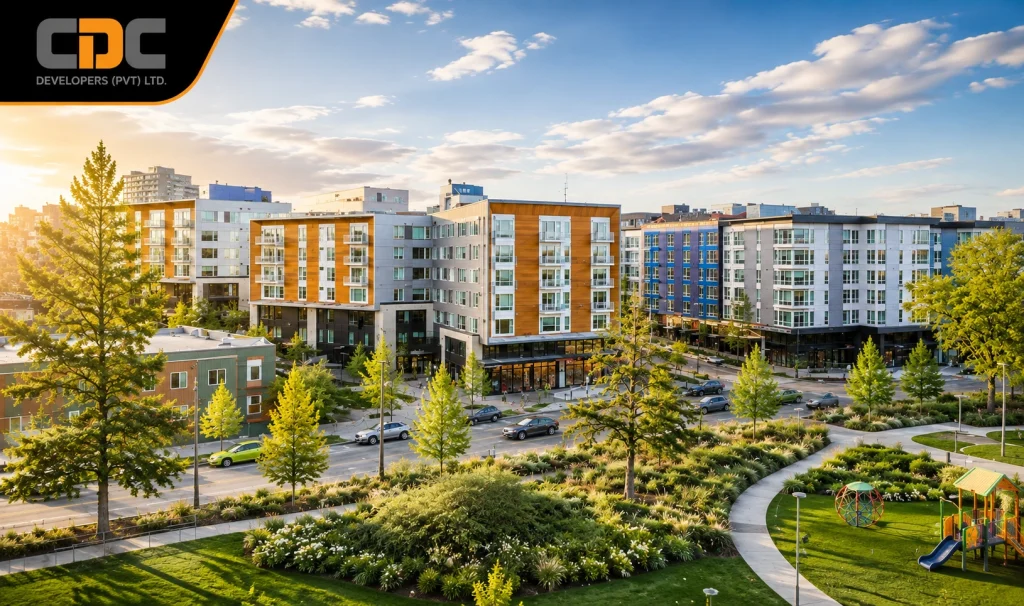
Real estate is undergoing one of the biggest shifts in decades, and at the center of that shift sits a simple but powerful idea: what if you never had to choose between where you live, where you work, and where you unwind? That is the promise of a live work play community, a planned neighborhood that blends housing, office space, retail, dining, and recreation into a single connected environment.
This model is more than a passing trend. It is a response to how people actually want to spend their time today. Instead of long commutes, disconnected neighborhoods, and single purpose zoning, live work and play communities create integrated ecosystems where daily needs are within reach.
For decades, suburban growth followed a predictable pattern: residential subdivisions in one area, office parks in another, and shopping centers somewhere else entirely, all connected by roads that assume everyone owns a car and has time to spare. That model made sense when land was cheap and commuting was tolerated as a fact of life. It makes far less sense today. Live work play communities flip the script by asking a different question from the start: what would this neighborhood look like if convenience, connection, and efficiency were the priority rather than an afterthought?
That is the core value proposition of the model, and it is why this approach represents where real estate is heading, not where it has been.
The Three Core Pillars of a Live Work Play Ecosystem
Every successful live work play development rests on three interconnected pillars. When one is missing or underdeveloped, the whole ecosystem feels incomplete. When all three are balanced, the result is a neighborhood that functions like a small, self sufficient city.
Live: Residential Variety
The residential component of a live work play community cannot be one size fits all. Successful developments offer a range of housing types designed for different life stages, budgets, and preferences. Common formats include:
- Luxury apartments for young professionals
- High rise condominiums with skyline views
- Townhomes for growing families
- Single family style residences for those who want more space without leaving the community
This variety matters because it keeps the population diverse. A neighborhood filled only with studio apartments will attract a narrow demographic, while one that mixes unit types tends to build a more resilient, multigenerational community. That diversity also supports the retail and entertainment layer, since different residents bring different spending habits and daily routines.
Work: Flexible Commercial Hubs
The work pillar has changed dramatically in recent years. It is no longer just about traditional office towers. Today it includes:
- Coworking lounges for freelancers and small teams
- Private offices that can scale up or down as a business grows
- Meeting suites that can be booked by the hour
- High speed digital infrastructure that supports remote and hybrid schedules
This is where the idea of a concept working model becomes important. Rather than assuming everyone commutes to a central office five days a week, modern developments design for flexibility. A resident might work from a coworking lounge two floors below their apartment on Monday, join a video call from a private booth on Wednesday, and work entirely from home on Friday. The concept working model adapts to the person instead of forcing the person to adapt to a rigid office structure. Well designed commercial spaces build this flexibility in from day one, rather than retrofitting it later.
Play: Recreation and Retail
The final pillar is what turns a functional development into a place people genuinely want to spend time. A strong play layer usually includes:
- Pedestrian friendly retail corridors
- Restaurants and cafes at street level
- Green parks and shaded seating areas
- Fitness studios and entertainment venues
- Weekend markets and community events
This is often the most visible part of the concept, and for good reason. Wide sidewalks, easy access to green space, and street level retail combined with walkable connections between residential and office zones keep foot traffic steady throughout the day rather than concentrated only during commuting hours.
Why Demand Is Surging for Live Work Play Real Estate
The Fifteen Minute City Movement
Urban planners around the world have embraced the idea of the fifteen minute city, where daily essentials, work, groceries, healthcare, recreation, are all reachable within a short walk or bike ride. This philosophy aligns closely with the live work play model. People are tired of spending hours each week in traffic just to reach the places they need to be. A well planned community collapses those distances and gives time back to residents. That reclaimed time is often the single biggest selling point for buyers comparing a mixed use development against a traditional suburban home.
Post Pandemic Hybrid Work
The shift toward hybrid work permanently changed what people expect from where they live. Professionals no longer want to choose a home based purely on proximity to a single downtown office. Instead, many prefer neighborhood hubs that offer a coworking space nearby, a good coffee shop within walking distance, and a short trip to their actual office on the days they need it. This has made live work play communities especially attractive to remote and hybrid employees who want flexibility without sacrificing convenience, and it has pushed many companies to rethink where they lease office space in the first place.
Community and Wellbeing
There is also a wellness dimension to this demand. Walkable, outdoor centric neighborhoods encourage physical activity simply as a byproduct of daily life. Bumping into neighbors at a local cafe or park fosters social connection in a way that isolated suburban living often does not. Reduced reliance on cars means less time spent stressed in traffic. Together, these factors make live work play communities appealing not just logistically, but emotionally.
Benefits of Live Work Play Assets for Developers and Investors
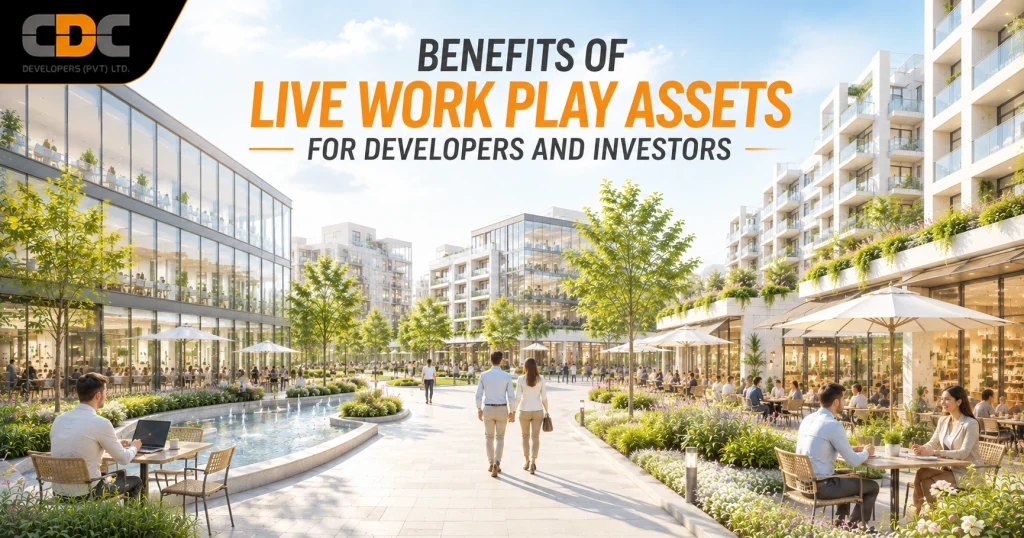
Mixed use development is not just appealing to residents. It also offers real financial advantages for the developers and investors behind these projects. The key benefits include:
- Diversified risk and income: A single use residential property depends entirely on rental income from tenants. A live work play asset spreads revenue across residential rentals, commercial leases, and retail space, so if one segment softens during an economic cycle, the others can help stabilize overall performance.
- Higher retention and lower vacancy: Multifunctional amenities give residents and commercial tenants more reasons to stay long term. When someone can live, work, and socialize within the same footprint, the friction of moving elsewhere increases, which tends to translate into higher renewal rates and lower vacancy.
- Higher asset valuation: Integrated developments consistently command premium rental yields compared to single use properties in the same general area. Buyers and tenants are willing to pay more for convenience, and that willingness shows up in long term capital growth.
These are the factors that experienced developers weigh heavily when planning new projects, since a well balanced mixed use asset tends to outperform traditional single purpose real estate over time.
Key Challenges in Live Work Play Development and Solutions
No development model is without obstacles, and live work play projects come with their own set of complexities. The three most common challenges, and how they are typically solved, are outlined below.
Zoning and regulatory approval. Municipal zoning codes were largely written for single use development, which means mixed use projects often require variances, special permits, or entirely new zoning categories.
- Solution: early and continuous engagement with local planning authorities
- Solution: a master plan that clearly demonstrates the community benefits of integrated design
- Solution: detailed traffic studies, infrastructure plans, and phased rollouts presented upfront
Capital intensity. Building residential towers, commercial space, and retail corridors simultaneously requires significant capital and careful sequencing.
- Solution: multi phase development, where early phases generate revenue that helps fund later ones
- Solution: diversified financing structures combining equity partners and construction loans
- Solution: public private partnerships where applicable
Tenant mix management. Balancing a lively retail corridor, resident privacy, and commercial office noise is an ongoing operational challenge rather than a one time fix.
- Solution: buffering residential floors from high traffic retail areas
- Solution: scheduling loading and deliveries during off peak hours
- Solution: active property management that curates the retail tenant mix around resident lifestyles
Real World Case Studies: Successful Mixed Use Ecosystems
Around the world, several standout developments illustrate what the work live play model looks like when executed well. Large scale urban districts that combine high rise residential towers with ground floor retail and centrally located office campuses consistently report stronger occupancy and higher resident satisfaction than comparable single use properties nearby. Regional examples closer to home often follow a similar pattern: a central plaza or green space anchors the development, retail lines the pedestrian paths leading to it, and residential and office buildings frame the perimeter within easy walking distance.
The common thread across these examples is intentional design. Successful projects do not simply place three property types next to each other and call it mixed use. They actively design circulation paths, sightlines, and amenity placement so that living, working, and leisure naturally intersect throughout the day.
Takeaways for Developers
A few practical lessons emerge consistently from these case studies:
- Layout design should prioritize pedestrian movement over vehicle access, since walkability is the feature that ties the three pillars together.
- Amenity selection should reflect the actual demographic mix of residents rather than a generic checklist, since a community full of young professionals has very different needs than one geared toward families.
- Phased execution allows developers to test demand, adjust the tenant mix, and refine designs before committing fully to later stages, reducing overall risk.
- Integration should be treated as a design principle, not a marketing label. It is easy to call a project live work play simply because it contains apartments, offices, and a coffee shop on the ground floor. It is far more valuable to actually engineer daily movement, where residents grab breakfast, work from a coworking lounge, and unwind in a nearby park, so the three pillars intersect naturally throughout the day.
Conclusion and Next Steps
The live work and play model is not a passing trend driven by temporary post pandemic habits. It reflects a permanent shift in how people want to structure their daily lives, prioritizing time, convenience, and genuine community connection over the old assumption that home, office, and leisure must be scattered across separate parts of a city.
For residents, it means less time commuting and more time living. For developers and investors, it means diversified income, stronger retention, and long term asset appreciation. For neighborhoods, it means walkable, vibrant spaces that function around the clock rather than emptying out after business hours.
If you are interested in exploring featured mixed use property listings, downloading a full development guide, or speaking directly with a project advisory team about bringing a live work play community to your area, we invite you to reach out to CDC Developers.