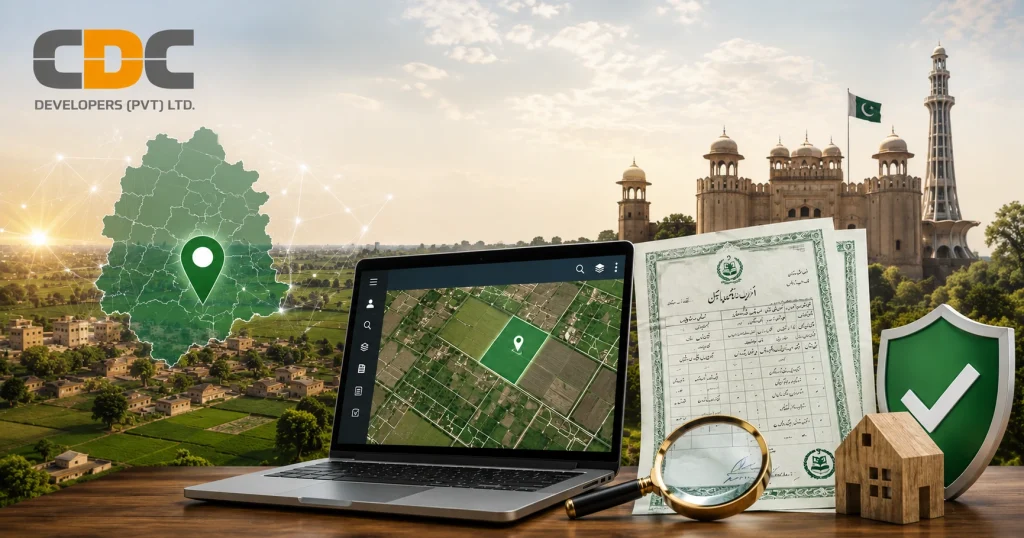
Introduction
Buying or selling property in Punjab is a major financial decision, and verifying land records before any transaction is one of the most important steps a buyer can take. For decades, property fraud was a common problem in the province. Fake ownership claims, tampered records, and double sales left many families in financial and legal trouble. Much of this happened because land records were kept manually, which made them easy to alter and hard to verify quickly.
Digitization has changed this picture significantly. By moving land records into a centralized digital system, the government has made it possible for citizens to check ownership details, request documents, and track property status without depending on middlemen. This is where the Punjab Land Record Authority comes in.
In this guide, you will learn what PLRA is, why it was created, how its digital system works, the services it offers, and how you can use the PLRA website to verify property records online. By the end, you will have a clear understanding of how to protect yourself before any land transaction in Punjab.
What Is the Punjab Land Record Authority?
The Punjab Land Record Authority is a government body responsible for managing and safeguarding land ownership records across the province. It operates under the administrative control of the Board of Revenue, Punjab, and was established through dedicated legislation to bring structure and consistency to how land data is recorded and shared.
Here is what makes PLRA different from the old record keeping setup:
- It consolidates land documentation into one accessible system instead of scattering it across local offices.
- It serves every district and tehsil in Punjab, covering both rural and urban property.
- It gives buyers and sellers a single point of reference for verifying who actually owns a piece of land.
- It reduces the dependence on local officials for basic record checks.
Overview of PLRA
PLRA was not built as a small add on office. It was designed as the central authority for land data in the province, meaning that every district office and tehsil record eventually connects back to this same system. This structure is what allows a citizen in one district to verify a record tied to property in another district without traveling there in person.
Why Was PLRA Created?
Before this authority existed, land records in Punjab were maintained by Patwaris under a manual system that had been in place for generations. While the system worked in its time, it came with serious drawbacks.
A few of the recurring problems under the old system included:
- Handwritten registers that were prone to errors and easy to misplace.
- Heavy reliance on a single official, which opened the door to corruption and informal manipulation.
- Long delays just to obtain a copy of one’s own ownership document.
- Frequent disputes caused by tampered or missing entries.
The need for a centralized, tamper resistant digital system became impossible to ignore, and that need led directly to the formation of PLRA.
Objectives of the Punjab Land Authority
The Punjab land authority was built around a few clear goals: complete digitization of records, transparency in how ownership information is shared, faster service delivery compared to the old manual process, and stronger protection of ownership rights against unauthorized changes. Each of these objectives directly addresses a weakness of the system PLRA replaced.
How the Digital PLRA System Works
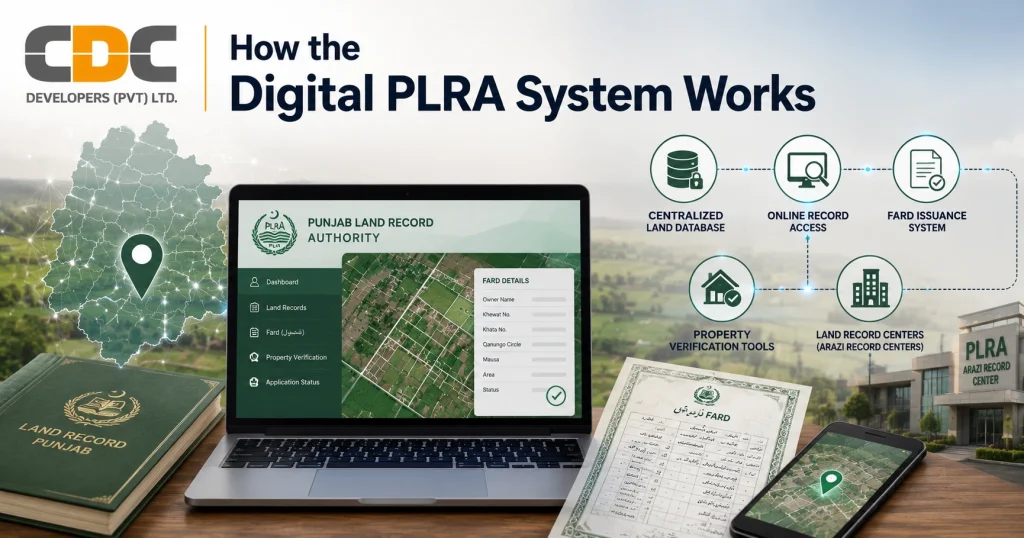
At the core of the digital PLRA system is the conversion of old paper records into structured electronic data. Every plot, owner, and transaction history that was once written by hand is now stored digitally, which is what makes the entire verification process so much faster than before.
This shift shows up in three main parts of the system, covered below.
Digitized Land Records
Instead of searching through dusty registers at a local office, a record can be pulled up on a screen within seconds, and verification that once took days can often be completed in a single sitting.
Centralized Database
District and tehsil level records are no longer kept in isolation. They feed into a centralized database that authorized offices and, increasingly, the public can access.
A few practical effects of this centralization are worth noting:
- When a mutation or correction happens in one location, the update reflects across the system.
- Real time updates reduce the chances of someone relying on outdated information during a property deal.
- Authorized staff across different offices can pull the same record without conflicting versions.
Security and Transparency
Because the system is digital and centralized, the level of human interference that once allowed records to be altered informally has been greatly reduced. Access is controlled, actions are logged, and ownership information is protected against the kind of quiet manipulation that was possible under the old paper based approach.
Key Services Offered by PLRA
PLRA does not just store records. It actively delivers a set of services that most landowners and buyers will need at some point. The main ones are listed below before each is explained in more detail.
- Property ownership verification
- Fard issuance
- Mutation (Intiqal) services
- Record corrections
- Citizen facilitation services
Property Ownership Verification
One of the most valuable services PLRA provides is ownership verification. Before any buyer commits money to a property, they can check the official record to confirm who truly owns it, which prevents a large share of the fraud cases that used to plague property transactions in Punjab.
Fard Issuance
A Fard is the official document that confirms land ownership, and PLRA handles its issuance. Anyone who needs proof of ownership, whether for a bank loan, a legal matter, or a simple ownership check, can request this document through the authority.
Mutation (Intiqal) Services
When ownership of land changes hands, that change has to be formally recorded, and this process is called mutation or Intiqal. PLRA manages this for sales, inheritance transfers, and gifts, and without a properly recorded mutation, a new owner’s claim to the property remains legally incomplete.
Record Corrections
Mistakes do happen, whether from old manual entries or clerical errors during digitization. PLRA allows citizens to request corrections to ownership details and other recorded information.
Citizen Facilitation Services
To support people who are unfamiliar with the digital system, PLRA also offers help desks, online assistance, and a structured way to file complaints rather than leaving citizens to navigate the system alone.
PLRA Website and Online Services
The PLRA website acts as the digital front door to the authority’s services, and it has grown into the main channel through which most citizens now interact with the system.
Features of the PLRA Website
Through the website, citizens can access land records, submit service requests, and track the status of pending applications such as mutations or correction requests. This removes much of the guesswork that used to surround how long a request might take or whether it had even been received.
Benefits of Online Services
Moving these services online has brought several clear advantages:
- It saves time that would otherwise be spent traveling to a local office.
- It removes the need for multiple in person visits to follow up on a single request.
- It allows overseas Pakistanis to verify and manage their land matters without traveling back to the country.
Available Digital Services
Through the digital platform, citizens can typically access Fard requests, ownership verification, mutation tracking, and complaint submission, all without leaving home.
How to Check Land Records Online in Punjab
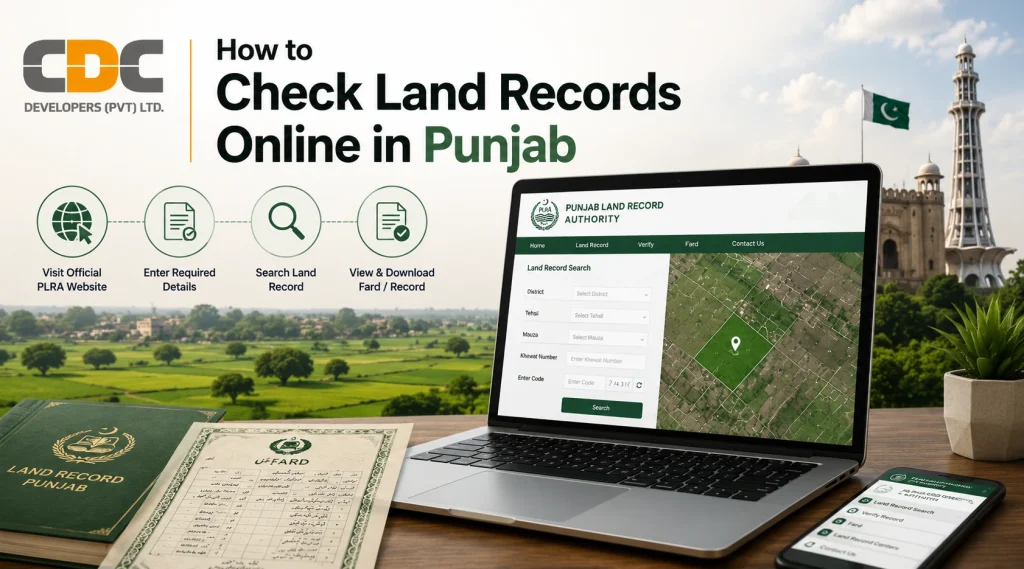
Checking a land record online follows a fairly simple sequence of steps. Once you know what information to keep ready, the whole process can be completed in a single sitting.
Step 1: Access the Official Portal
The process begins by visiting the official PLRA web portal. It is important to use the authentic government website rather than any third party site claiming to offer the same service, since fraudulent sites have been known to mislead users searching for land record information.
Step 2: Select District and Tehsil
Once on the portal, you will need to select the specific district and tehsil where the property is located, since records are organized regionally.
Step 3: Enter Property Information
Next, you will be asked to provide identifying details such as the owner’s CNIC, name, or relevant registry details like Khewat or Khasra numbers.
Having the following ready before you start will make the process faster:
- The owner’s CNIC number.
- The property’s Khewat or Khasra number.
- The exact district and tehsil name.
Step 4: Verify Ownership Details
After submitting the required information, the system will display the relevant ownership details, giving you the chance to confirm whether the person claiming to sell the property is indeed the registered owner.
Step 5: Download Available Records
Finally, where the system allows it, you can save or download a copy of the record for your own files, which is useful for future reference if any dispute arises later.
Understanding Fard and Its Importance
A Fard is one of the most frequently requested documents in any property transaction, so it is worth understanding exactly what it covers.
What Is a Fard?
A Fard is the official ownership document that confirms who owns a particular piece of land, issued and maintained through the land record authority.
Types of Fard
Different types of Fard exist depending on the purpose, such as:
- A simple copy of the existing record for general verification.
- A Fard specifically required when land is being sold or transferred.
- A Fard used when property is offered as collateral for a loan.
Knowing which type you need before requesting one can save unnecessary delays.
Why Fard Matters
The Fard is central to nearly every meaningful land transaction. Buyers rely on it to confirm a seller’s legitimacy, banks rely on it before approving loans against property, and courts rely on it when resolving ownership disputes.
Land Mutation (Intiqal) Process in Punjab
Mutation is one of the more procedural parts of dealing with PLRA, but it is also one of the most important, since an incomplete mutation can weaken a buyer’s legal position later.
What Is Mutation?
Mutation is the formal process of updating land ownership records after a transfer of title, whether through sale, inheritance, gift, or court order.
Required Documents
To initiate a mutation, applicants generally need the following:
- A valid CNIC.
- The sale deed or equivalent transfer document.
- Any supporting records relevant to the specific type of transfer, such as a succession certificate in inheritance cases.
Mutation Procedure
The process typically starts either at the PLRA web portal or at an Arazi Record Center. After submission, the applicant’s identity is verified, supporting documents are checked, and once approved, the updated ownership is recorded in the digital system.
Processing Time and Fees
Processing times and fees can vary depending on the nature of the transfer and the completeness of the submitted documents, so it is worth confirming current details directly with PLRA or your local Arazi Record Center before starting the process.
Benefits of Digital Land Records for Property Buyers
Taken together, the shift to digital records has changed the experience of buying property in Punjab in a few concrete ways.
Reduced Property Fraud
When ownership can be verified instantly against an official digital record, fraudulent sales become far harder to carry out, and buyers no longer have to take a seller’s word at face value.
Faster Transactions
Digital access to records means verification and documentation steps that once took weeks can often be completed in a matter of days or even hours.
Better Transparency
With centralized and accessible data, ownership information is far less likely to be hidden or altered without a clear paper trail.
Convenience for Overseas Pakistanis
For Pakistanis living abroad who own land in Punjab, digital services mean they can check records, request documents, and even initiate certain processes without flying back home.
Common Challenges in the PLRA System
No system is without its limitations, and PLRA is no exception. A few challenges still come up in practice:
- Missing records: Not all historical records have been fully digitized, particularly older entries from rural areas.
- Technical issues: Like any large digital platform, the PLRA website can experience downtime or technical glitches.
- Data update delays: Pending mutations that have not yet been fully processed can mean the most recent ownership change is not immediately reflected.
- Public awareness issues: Many citizens, especially in rural areas, are still not fully aware of how to use the online services available to them.
Missing Records
This gap mostly affects very old ownership history, where original documentation may never have made it into the digital archive in the first place.
Technical Issues
Downtime tends to be temporary, but it can be frustrating for anyone trying to complete a time sensitive transaction.
Data Update Delays
This is why it is worth checking the mutation status of a property separately from simply confirming the name on the existing record.
Public Awareness Issues
This continues to push some citizens toward in person visits even when a faster digital option already exists for the same task.
Tips Before Buying Property in Punjab
Before finalizing any property deal, it helps to run through a short checklist rather than relying purely on verbal assurances from the seller.
- Verify ownership through official PLRA records rather than documents shown to you by the seller.
- Check that any previous transfer of the property has been properly mutated.
- Review all supporting documentation, including the Fard and sale deed, before signing anything.
- Stay alert to unusually cheap deals or sellers who pressure you to close quickly.
Verify Ownership
Always confirm ownership through official PLRA records rather than relying solely on documents shown to you by the seller.
Check Mutation Status
An incomplete mutation can mean the seller’s legal claim is weaker than it appears, even if they hold an older Fard in their name.
Review Legal Documentation
Go through all supporting documents carefully, including the Fard, sale deed, and any relevant certificates, before finalizing any agreement.
Avoid Unrealistic Deals
Be cautious of deals that seem unusually cheap or sellers who pressure you to close quickly without giving you time to verify records, since these are common warning signs of a potential scam.
Future of Digital Land Management in Punjab
The direction of digital land management in Punjab points toward even greater integration of technology. A few developments to watch for include:
- Wider use of GIS mapping for precise visual representation of land boundaries alongside ownership data.
- Continued expansion of online services to further reduce the need for in person visits.
- Stronger security systems, including more advanced identity verification.
Taken together, these developments point toward a future where land management in Punjab becomes increasingly transparent, efficient, and accessible to every citizen, regardless of where they live.
Frequently Asked Questions (FAQs)
What is the Punjab Land Record Authority? It is the government body responsible for managing, digitizing, and protecting land ownership records across Punjab, operating under the Board of Revenue.
How can I access the PLRA website? You can access it by visiting the official government portal directly, where you can request services such as Fard issuance, ownership verification, and mutation tracking.
Can I verify property ownership online? Yes, ownership verification is one of the core services available through the PLRA online system, allowing you to confirm a record before making any property decision.
What is a Fard? A Fard is the official document that confirms who owns a particular piece of land, and it is required for most legal and financial property matters.
How long does mutation take? Processing time depends on the type of transfer and how complete the submitted documents are, so it is best to confirm current timelines with PLRA directly.
Can overseas Pakistanis verify property online? Yes, the online system is designed to allow overseas Pakistanis to check ownership records and access several services without needing to travel back to Punjab.
What should I do if my record is unavailable? If a record appears missing, it is advisable to contact your nearest Arazi Record Center, since some older entries may not yet be fully digitized.
Conclusion
The Punjab Land Record Authority has fundamentally changed how property ownership is recorded and verified across the province. By replacing a manual system that was vulnerable to errors and corruption with a centralized digital structure, PLRA has made land transactions safer and more transparent for everyone involved.
A quick recap of what this guide covered:
- PLRA replaced the old Patwari system with a centralized, digital record structure.
- Its core services include Fard issuance, ownership verification, mutation, and record corrections.
- The PLRA website allows most of these services to be accessed without an in person visit.
- Verifying ownership before any transaction remains the single most important safeguard for buyers.
Property fraud has not disappeared entirely, but the tools to protect yourself are now more accessible than ever. Before entering into any land transaction in Punjab, take the time to verify ownership through official PLRA channels rather than relying on assurances alone.