
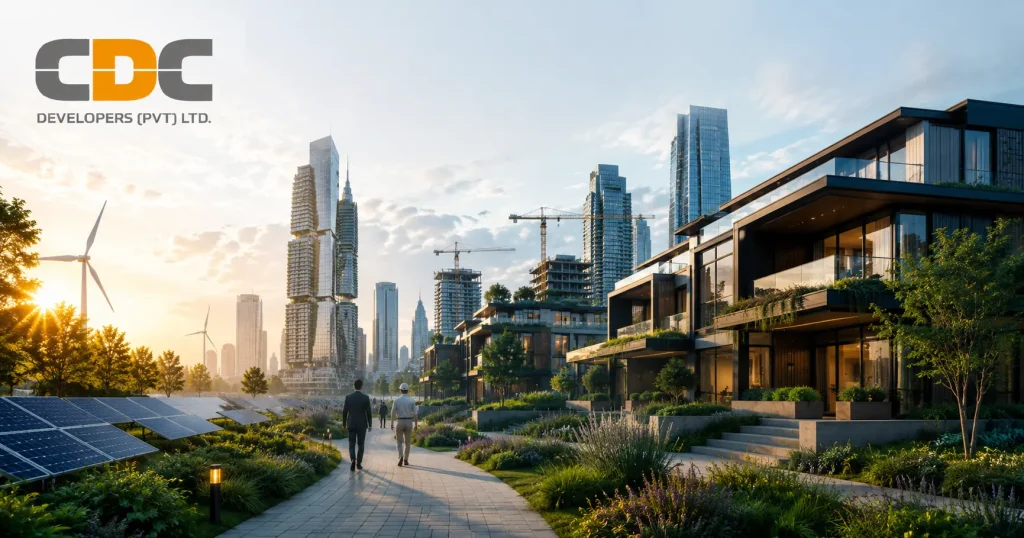
The real estate sector is entering one of the most transformative periods in its history. Rapid urbanization, advancing technology, and a growing focus on sustainability are reshaping how properties are designed, built, and experienced. For investors, developers, and buyers alike, understanding these shifts is no longer optional. It is essential for making smart decisions in a market that looks very different than it did even a decade ago.
This guide explores the trends, challenges, and opportunities defining the future of real estate development, offering a practical roadmap for anyone looking to stay ahead in this evolving industry.
Understanding the Development of Real Estate
What Is Real Estate Development?
Real estate development refers to the process of transforming land or existing structures into usable residential, commercial, or mixed use properties. Its purpose is to create value by identifying opportunities, securing financing, designing projects, and bringing them to completion in a way that meets market needs.
A typical real estate project moves through several key stages:
- Land acquisition and site evaluation
- Feasibility analysis and financial planning
- Design and architectural planning
- Permitting and regulatory approval
- Construction and project management
- Marketing, leasing, or sale of the finished property
Each stage requires close coordination between developers, architects, contractors, and local authorities to ensure the project meets both regulatory standards and community expectations.
What Is a Housing Development?
A housing development is a planned residential community, often consisting of multiple homes, townhouses, or apartment units built within a defined area. These developments can range from small subdivisions to large scale master planned communities.
Common types of housing developments include single family subdivisions, townhome communities, apartment complexes, and mixed income residential projects. Planned residential communities matter because they allow for coordinated infrastructure, shared amenities, and cohesive neighborhood design. Rather than isolated, disconnected construction, housing developments create a sense of place, with thoughtfully arranged streets, parks, and utilities that serve residents efficiently.
How Real Estate Developments Have Evolved Over Time
Traditional development approaches focused primarily on functionality, building structures quickly to meet basic housing or commercial demand. Modern approaches take a far more holistic view, factoring in sustainability, technology integration, lifestyle preferences, and long term community impact.
Several market shifts are driving this innovation, including changing demographics, rising environmental awareness, and the increasing role of digital tools in design and construction. Developers today must think beyond the building itself and consider how a project fits into the broader urban fabric.
Current Trends in Real Estate Transforming the Industry
Sustainable and Green Property Developments
Sustainability has moved from a niche consideration to a central pillar of property development. Developers are increasingly prioritizing:
- Eco friendly construction practices, such as using recycled or low impact materials
- Energy efficient buildings with better insulation, solar panels, and smart climate control systems
- Green certifications, such as LEED, that formally validate sustainability efforts
These practices not only reduce environmental impact but also lower long term operating costs, making green developments attractive to both owners and tenants.
Smart Technology Integration
Technology is reshaping how properties function on a daily basis. Smart homes equipped with connected devices allow residents to control lighting, security, and climate settings remotely, improving convenience and energy efficiency.
On a larger scale, AI powered building management systems are helping commercial and residential properties optimize energy use, predict maintenance needs, and enhance security. The Internet of Things, or IoT, is also expanding rapidly in real estate, with sensors and connected systems monitoring everything from air quality to occupancy patterns.
WellnessFocused Communities
Modern buyers and renters increasingly prioritize health and wellbeing in their living environments. This has led to a rise in health centered design, including improved air filtration, natural lighting, and noise reduction features. Green spaces and recreation areas are now common features in new developments, offering residents opportunities for outdoor activity and relaxation.
Community focused living, with shared amenities like fitness centers, walking trails, and social gathering spaces, is also playing a larger role in how developments are planned and marketed.
Flexible Living and Working Spaces
The rise of hybrid work has changed what people expect from their homes. Many properties now include multi purpose residential spaces designed to function as both living areas and home offices. This shift has created strong demand for adaptable properties that can evolve alongside changing lifestyle needs, whether that means a spare room that doubles as a workspace or shared coworking areas within residential buildings.
Real Estate Redevelopment and Property Redevelopment in Modern Cities
What Is Real Estate Redevelopment?
Real estate redevelopment involves renovating, repurposing, or rebuilding existing properties or underused land to better serve current market needs. Its objectives often include improving outdated infrastructure, increasing density in urban areas, or converting vacant buildings into productive use. Redevelopment plays a critical role in urban planning, allowing cities to grow strategically without always expanding outward into undeveloped land.
Benefits of Property Redevelopment
Redevelopment offers a wide range of advantages for cities and communities, including:
- Economic growth driven by new businesses, residents, and investment
- Infrastructure improvement, including upgraded roads, utilities, and public transit access
- Increased property values as neighborhoods are revitalized
Recent Developments in Urban Regeneration
Cities around the world are focused on revitalizing aging neighborhoods, transforming underused industrial zones and outdated housing stock into vibrant, livable spaces. This often includes modernizing existing infrastructure, such as updating water systems, electrical grids, and transportation networks. The end goal of many urban regeneration projects is creating sustainable communities that balance growth with environmental responsibility and quality of life for residents.
How Residential Real Estate Projects Are Meeting Modern Demand
Growing Demand for Residential Developments
Several factors are driving increased demand for residential real estate, including continued population growth, urban migration as people move toward cities for employment opportunities, and changing lifestyle preferences that favor convenience and community amenities.
Affordable Housing Solutions
As housing costs rise in many markets, developers are exploring innovative ways to improve affordability. This includes modular construction, smaller unit designs, and co living arrangements. Public private partnerships are also playing a larger role, combining government incentives with private development expertise to expand access to affordable housing. These efforts focus heavily on accessibility and affordability, ensuring a wider range of buyers and renters can find suitable housing options.
Smart Residential Communities
New residential developments increasingly incorporate integrated technologies, enhanced security systems, and sustainable living features. Common examples include:
- Smart locks and centralized building management systems
- App based access control and video monitoring for added security
- Energy efficient appliances, water conservation systems, and eco friendly landscaping
The Role of Real Estate Property Developers in Shaping Communities
Planning Successful Real Estate Projects
Successful real estate projects begin with careful site selection, identifying locations with strong growth potential and suitable infrastructure. This is followed by thorough market research to understand local demand, pricing trends, and buyer preferences. Feasibility studies help developers assess whether a project makes financial and practical sense before significant resources are committed.
Innovation in Real Estate and Construction
Modern construction methods, including prefabrication and modular building techniques, are speeding up timelines while reducing waste. Digital project management tools allow teams to coordinate more efficiently, tracking budgets, schedules, and resources in real time. Sustainable building materials, such as recycled steel and low carbon concrete, are also becoming more widely used as developers prioritize environmental performance.
Delivering LongTerm Value
Quality development standards ensure that properties remain durable and functional well beyond initial construction. Community focused planning considers how a project will serve residents and surrounding neighborhoods for years to come. Future ready infrastructure, designed with scalability and adaptability in mind, helps ensure developments remain relevant as needs and technologies continue to change.
Property Development Opportunities Emerging in the Market
Smart Cities and Future Developments
Technology driven urban growth is reshaping how cities plan for the future. Connected infrastructure, including smart traffic systems and integrated utility networks, is improving efficiency across entire urban areas. Sustainable city planning is also gaining momentum, with municipalities prioritizing green spaces, public transit, and reduced carbon emissions as part of long term growth strategies.
MixedUse Property Developments
Mixed use developments combine residential and commercial spaces within a single project, creating walkable communities where people can live, work, and shop without long commutes. These developments offer clear benefits for both residents and businesses, including increased foot traffic for retailers and added convenience for residents. As lifestyle preferences shift toward convenience and connectivity, growing market demand for mixed use properties continues to rise.
New Development Areas for Investment
Investors are increasingly looking toward emerging urban corridors, areas experiencing early stage growth before becoming fully established markets. High growth regions, often located near expanding transportation networks or business hubs, offer significant long term investment potential for those willing to enter early.
What Are the Developments Driving the Future of Real Estate Industry?
Digital Transformation
AI and automation are streamlining everything from property management to construction scheduling. Virtual property tours have become a standard tool, allowing buyers and renters to explore properties remotely before making decisions. Big data in real estate is also playing a growing role, helping developers and investors analyze market trends, pricing patterns, and consumer behavior with far greater precision than in the past.
Sustainability and Environmental Responsibility
Many developers are setting clear carbon reduction goals as part of their long term strategy. Green construction initiatives, including waste reduction and sustainable sourcing, are becoming standard practice across the industry. Renewable energy integration, particularly solar power, is increasingly common in both residential and commercial developments, helping reduce long term operating costs and environmental impact.
ConsumerCentric Development Strategies
Today’s buyers and renters expect more personalization in their living spaces, from customizable finishes to flexible floor plans. Successful developers are prioritizing community engagement, involving local residents in planning discussions to ensure projects meet real neighborhood needs. Lifestyle focused amenities, such as fitness centers, coworking spaces, and pet friendly features, are also becoming key differentiators in a competitive market.
Challenges Facing the Property Development Industry
Despite strong growth and innovation, the industry continues to face several persistent challenges:
- Rising construction costs caused by material price fluctuations and ongoing labor shortages
- Complex regulatory and compliance requirements, including building codes, environmental regulations, and zoning laws
- Economic and market uncertainty driven by inflation, interest rate changes, and shifting demand patterns
Developers who manage these challenges effectively, through careful budgeting, strong local partnerships, and flexible planning, are better positioned to deliver successful projects even in difficult conditions.
The Future of Real Estate: Predictions for the Next Decade
Future Development Trends to Watch
Smart infrastructure will likely become even more deeply integrated into both residential and commercial properties. Sustainable urban expansion will continue to prioritize efficient land use and reduced environmental impact. Data driven development, using analytics to guide design and investment decisions, is expected to become a standard part of the planning process across the industry.
The Future for Real Estate Investors
Emerging opportunities will likely center around technology integration, sustainability, and adaptive reuse of existing properties. Long term growth sectors, including affordable housing and mixed use developments, are expected to remain strong areas of investor interest. Risk management strategies will need to account for economic volatility, climate considerations, and shifting consumer preferences as the market continues to evolve.
Future of Residential Real Estate Projects
Technology enhanced communities, featuring smart home systems and connected infrastructure, will likely become the norm rather than the exception. Sustainable housing solutions will continue to expand as both regulatory pressure and consumer demand push the industry toward greener practices. Evolving consumer expectations, shaped by changing work patterns and lifestyle priorities, will continue to influence how residential properties are designed and marketed.
Key Takeaways for Investors, Developers, and Homebuyers
Staying informed about sustainability, technology, and shifting demographics is essential for making sound real estate decisions in today’s market. Recognizing emerging growth areas, mixed use potential, and redevelopment possibilities can help investors and developers position themselves for long term success. Above all, flexibility and careful planning will be key for anyone involved in real estate moving forward, particularly as consumer expectations and market conditions continue to change.
Conclusion
The real estate industry is undergoing significant transformation, driven by sustainability priorities, technological innovation, and changing consumer expectations. From smart cities and mixed use developments to affordable housing solutions and green building practices, the trends shaping this industry offer both challenges and meaningful opportunities.
Innovation and sustainability are no longer optional considerations. They are central to building developments that deliver lasting value for investors, developers, and communities alike. As the industry continues to evolve, those who stay informed and adaptable will be best positioned to succeed in the real estate landscape of tomorrow.